Fairalloy
Open menu

Blog

Articles on gold sourcing, traceability and responsible supply chains.

  1. Standards & Responsibility

    ASM Credits Are Not Responsible Sourcing

    Luis Romero

    ASM credits are examined as financial contributions distinct from physically sourcing certified gold. The author argues that they can offer reputational benefits without changing a company’s material origins, raising concerns about misleading claims, reduced demand for traceable gold, uncompensated impacts and regulatory scrutiny. His alternative is to progressively incorporate physically traceable certified ASM gold into supply chains.
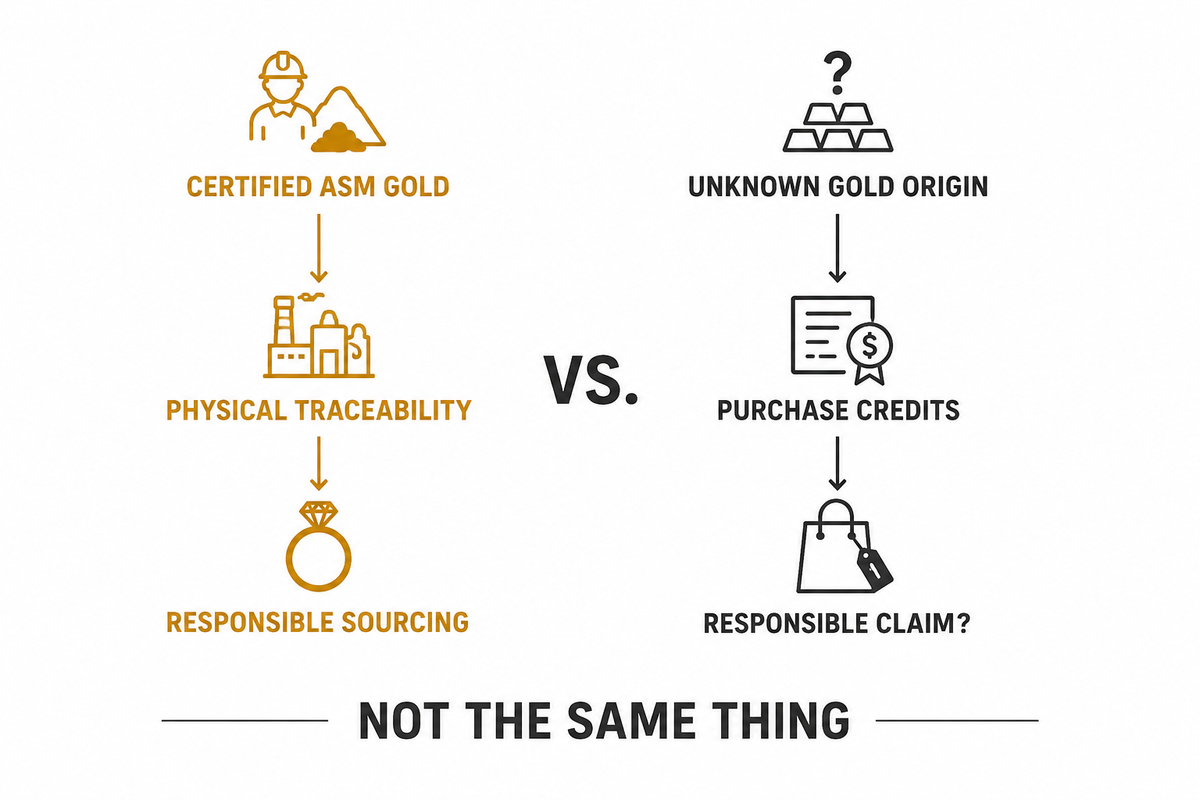
    Comparison between physically traceable certified ASM gold supply chains and ASM Credits, highlighting the difference between responsible sourcing through physical integration and credit-based compensation mechanisms
    Certified ASM gold integrated into supply chains is fundamentally different from credit-based compensation mechanisms. Traceability and financial support are not the same thing.
  2. Standards & Responsibility

    Richemont Says Cartier’s Gold Is Mostly Recycled. But What Does That Really Mean?

    Andres Castellanos

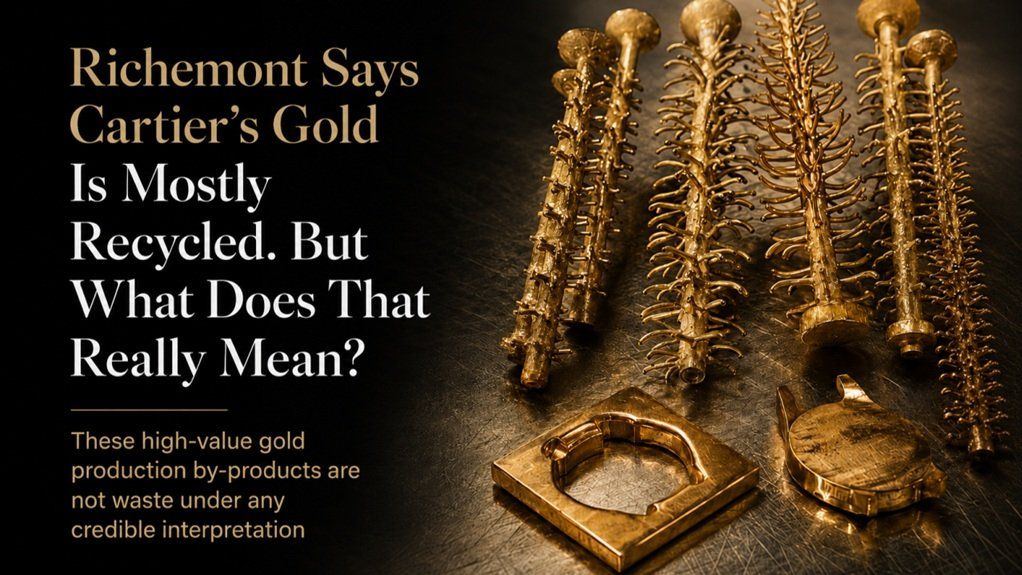
    Passages quoted from Richemont’s 2026 Non-Financial Report frame a critique of classifying manufacturing by-products and used jewelry as recycled gold. The author argues that their economic value complicates waste claims and that certification may leave upstream sources outside scrutiny. Terminology changes attributed in the article to Signet and Brilliant Earth provide a contrasting approach.

    Richemont Says Cartier’s Gold Is Mostly Recycled. But What Does That Really Mean?
  3. Origin & Traceability

    Secondary Gold: The Largest Laundering Channel in the Global Gold Market

    Andres Castellanos

    LBMA sourcing figures cited in the article contrast reported secondary-gold volumes with the small share attributed to ASM. The author interprets lighter scrutiny of secondary material as an opportunity to disguise illicitly mined gold through false scrap documentation and intermediary trading. This regulatory imbalance and weak origin traceability underpin his critique of the recycled-gold market.

  4. Origin & Traceability

    The Pre-consumer Recycled Gold Scam

    Andres Castellanos

    The classification of valuable gold manufacturing by-products as pre-consumer recycled material is challenged through jewelry production examples. The author argues that this labeling can obscure earlier origins and support misleading carbon claims. His critique focuses on traceability that stops at the manufacturer and calls for scrutiny of the upstream sources behind industrial recycled-gold narratives.

  5. Origin & Traceability

    From Mine to Market: Building a Socially Aware Gold Supply Chain

    Andres Castellanos

    A people-first approach to gold sourcing links leadership decisions with conditions in mining communities. The article recounts brands’ search for traceable gold and describes the worker protections, audits and segregation the author attributes to Fairmined supply chains. Fairalloy’s processing role is also outlined, supporting his argument that credible social and environmental claims should begin with traceable origins.

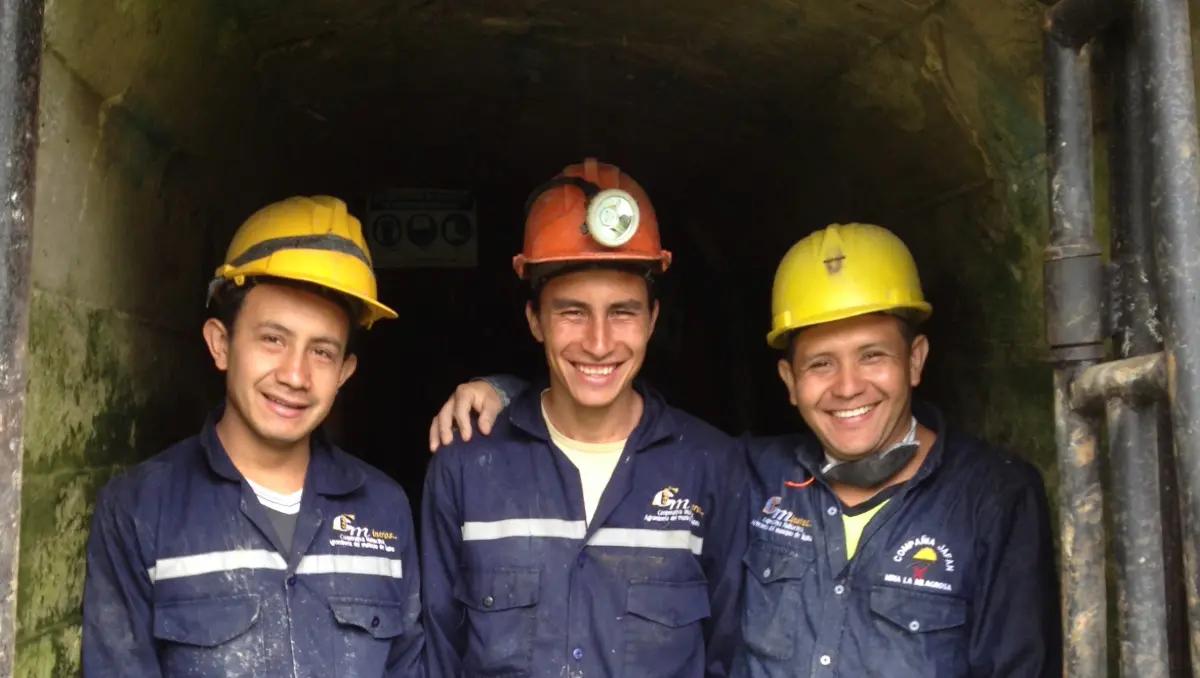
    Three people wearing hard hats and dark blue work clothes stand together at a tunnel entrance.
  6. Origin & Traceability

    Assessing Risks of Recycled Gold from Refineries

    Andres Castellanos

    Recycled-gold supply chains involving pawn shops, cash-for-gold businesses and aggregators are examined for risks the author associates with opaque origins. He describes how illicitly mined material can be disguised as scrap or jewelry and questions reliance on documentation after melting. Mapping each stage and material form is recommended, alongside scrutiny of environmental and responsible-sourcing claims without upstream visibility.

  7. Origin & Traceability

    KYC does not mean Traceability

    Luis Romero

    Supplier-focused Know Your Customer checks are distinguished from tracing the origin of individual gold transactions. A hypothetical comparison between two suppliers illustrates the author’s concern that risk criteria can miss upstream sources. His recommendation is to map and assess the entire supply chain, while recognizing that broader due diligence alone would still not fully ensure traceability.

  8. Origin & Traceability

    Transparency in Action: A Step-by-Step Guide to Refining Fairmined Gold

    Andres Castellanos

    The company’s account of refining Fairmined doré covers melting, fire assaying, aqua regia digestion, filtration, precipitation and final smelting, alongside waste handling and fume treatment. Physical segregation is the central concern: the author argues that processing certified material separately from other gold preserves its origin and urges buyers to request evidence of that separation.

    Fairalloy logo.
  9. Market & Applications

    Transparent Sourcing: The Step-by-Step Guide to Fairmined Gold Acquisition

    Andres Castellanos

    Fairalloy’s gold acquisition process is described from customer inquiry and quotation through mine purchases, assaying, refining, export authorization and shipment. The company’s account explains how inventory availability and order size affect the workflow. Physical segregation, staffing, equipment and coordination are presented as integral to maintaining the mine-specific origin claimed for Fairmined gold.

  10. Standards & Responsibility

    Corporate Vulnerability

    Andres Castellanos

    Corporate vulnerability provides a framework for discussing transparency in gold sourcing. The author criticizes recycled-gold narratives that omit pawn shops, aggregators and unknown origins, arguing that companies should acknowledge supply-chain limitations rather than project flawless responsibility. His proposed response combines clearer risk disclosure, closer engagement with mines and accountability for the social and environmental conditions behind gold sourcing.

  11. Market & Applications

    Understanding Fairmined Gold Prices: The Formula for Fairness

    Andres Castellanos

    Fairalloy’s pricing approach is explained through three components: the international gold benchmark, Fairmined social contributions and the company’s premium. The company’s account connects production costs, in-house processing and physical segregation with that premium. Its sourcing, manufacturing and international delivery arrangements are also described as part of the article’s explanation of pricing.

  12. Market & Applications

    Gold Industry 2035

    Andres Castellanos

    Gold sourcing in 2035 is explored through the author’s predictions for recycled or reprocessed gold, artisanal and small-scale mining, and large-scale mining. These forecasts include stronger scrutiny of unknown origins, clearer ASM definitions, more auditing and greater disclosure. Distinct pricing for certified ASM gold is also anticipated, with uncertainty acknowledged about the timing of these changes.

  13. Origin & Traceability

    Recycled vs. Fairmined Gold: Unveiling the Transparency Gap

    Andres Castellanos

    Fairmined certification is compared with the longer recycled-gold supply chains described in the article, including pawn shops, collectors, aggregators and refineries. The author argues that refinery-focused audits leave important upstream transactions outside scrutiny. Segregation, transaction tracking and independent audits across the chain are presented as central to the traceability he attributes to Fairmined.

  14. Standards & Responsibility

    Recycled Gold Scam

    Andres Castellanos

    Recycled-gold marketing and its effects on certified artisanal and small-scale mining are examined through the regulatory developments discussed in this article. The author argues that gaps in definitions and traceability can obscure material origins and divert demand from certified ASM. He contrasts these practices with the accountability and social contributions he attributes to Fairmined supply chains.